.svg)
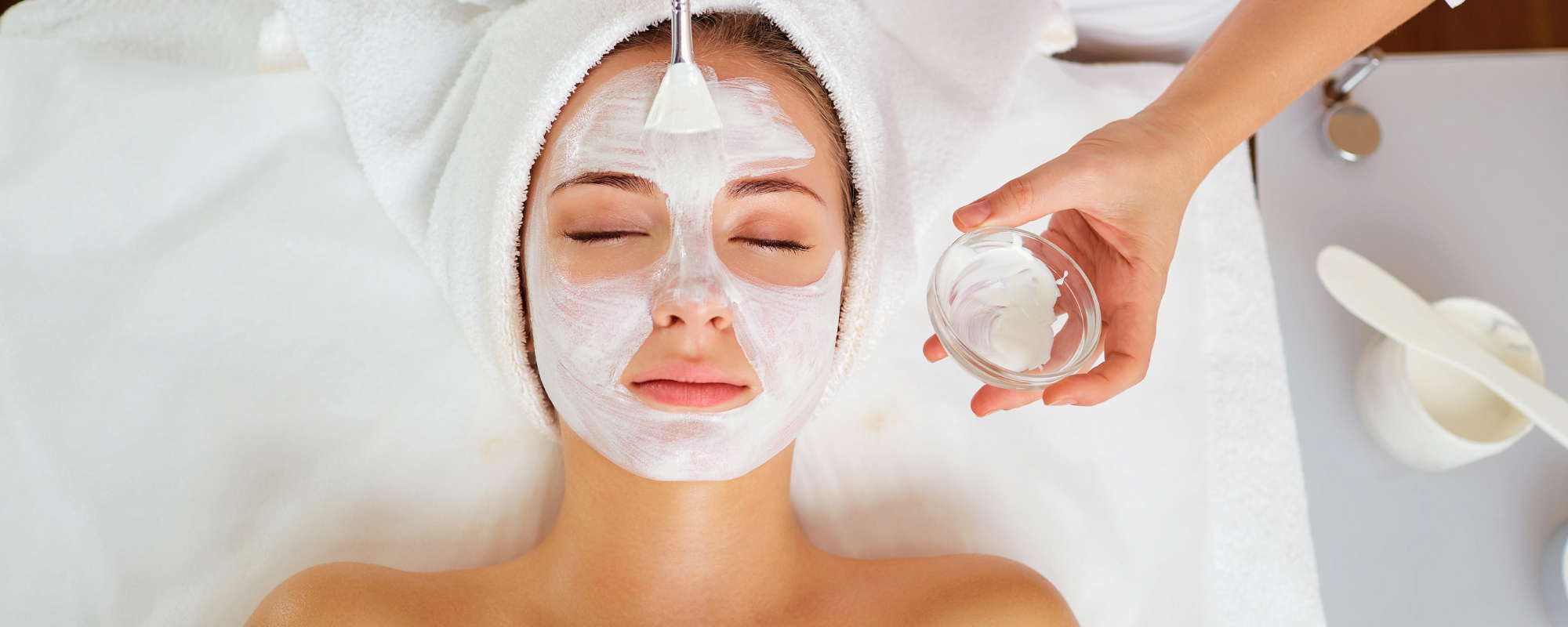
You've probably wondered if a facial is actually worth your time and money.
Maybe you've written it off as a luxury. Something people do to relax, not something that actually does anything for your skin. Or maybe you've had one before and loved how your skin felt afterward — but weren't sure if that feeling lasted or if it was just the mood lighting and the warm towels.
Here's the truth: a good facial is a real skin health treatment. And when it's part of a consistent routine — especially alongside other treatments — the results go well beyond one glowy afternoon.
Let's break it all down.
Let's get past the spa-day stereotype.A facial is a multi-step skin treatment. Depending on the type, it typically includes deep cleansing, exfoliation, extractions, a mask, and targeted serums or hydration. Each step serves a purpose — and together, they do something your at-home routine simply can't replicate.Here's what's actually happening:
The result isn't just relaxation. It's a reset. A clean, hydrated, functioning skin barrier — which is the foundation everything else builds on.
Done consistently, facials deliver benefits that compound over time.
Regular extractions and deep cleansing keep pores from staying chronically congested. Over time, they appear smaller because they're not constantly stretched with buildup.
Exfoliation removes the uneven layer of dead skin that makes your complexion look dull and feel rough. With regular facials, that smoothness becomes your baseline.
A hydrated skin barrier holds moisture more effectively. And because facials clear the surface layer, your skincare products actually penetrate after your appointment instead of just sitting on top.
A trained esthetician sees your skin up close, every session. They notice changes — new congestion patterns, sensitivity shifts, early signs of sun damage — before they become bigger problems.
This one isn't frivolous. Chronic stress elevates cortisol, which directly impacts skin health — increasing oil production, slowing healing, and triggering inflammation. The physiological relaxation response from a facial has a measurable effect on your skin, not just your mood.
Facials aren't one-size-fits-all — but they work well for a wide range of skin concerns. Here's a quick look at who tends to see the most noticeable results:
Skin Concern
What a Facial Targets
Dullness and uneven tone
Exfoliation, circulation, brightening serums
Congestion and breakouts
Deep cleansing, extractions, clarifying masks
Dryness and dehydration
Barrier repair, hydrating serums, moisture lock
Early signs of aging
Collagen-stimulating massage, firming actives
Stress-related skin issues
Cortisol regulation, circulation, calming ingredients
Sensitive or reactive skin
Gentle barrier support, inflammation reduction
If you've been dealing with any of these and your at-home routine isn't moving the needle — a facial is a smart, low-barrier place to start.
This is the question we hear most often. And the honest answer is: it depends on your skin goals.
A good rule of thumb is to align your facial frequency with your skin's natural cell turnover cycle — roughly every four to six weeks. That's the sweet spot where you're maintaining results without over-treating.
Skin Goal
Recommended Frequency
General maintenance and glow
Every 4–6 weeks
Active acne or congestion
Every 3–4 weeks
Anti-aging and firmness
Every 4–6 weeks
Dry or dehydrated skin
Every 4–5 weeks, especially seasonally
Pre-event skin prep
1 week before the event
Complement to device treatments
Timed between laser or microneedling sessions
One facial feels great. A series of facials over several months is where you start to see real, lasting change in your skin's texture, tone, and resilience.
Here's something a lot of people don't realize.Facials don't just stand alone — they make your other skin treatments work better.
If you're doing microneedling , IPL , or ClearLift , your skin's baseline condition directly affects how well those treatments perform. A well-hydrated, clean, healthy skin barrier responds better to device-based treatments. Recovery is smoother. Results are more pronounced.
Think of it this way: device treatments do the deep remodeling work — stimulating collagen, targeting pigment, resurfacing at a cellular level. Facials keep your skin in peak condition between those sessions so you're always starting from the best possible baseline.
A few ways they work together:
If you're already investing in skin treatments, adding regular facials into your routine is one of the smartest things you can do to protect that investment.
We keep it simple and personalized.
When you come in for a facial at Wasatch Advanced Wellness, we start by looking at what your skin actually needs — not a one-size-fits-all menu. From there, we'll recommend one of our three facial options:
Not sure which one is right for you? That's what we're here for. We'll look at your skin, ask about your goals, and point you in the right direction — whether that's starting with a relaxation facial or jumping straight into a treatment series.Your appointment is calm, unhurried, and completely focused on you. No upselling. No pressure. Just good skin care from people who actually know what they're doing.If you're ready to see what consistent facial treatments can do for your skin, you can book your appointment today. We're conveniently located in Payson and serve all of Utah County including Spanish Fork, Santaquin, and Provo.
If you're ready to start laser tattoo removal but want a realistic sense of what to expect, knowing your timeline makes all the difference. This guide breaks down what determines how many sessions you'll need, why spacing between sessions matters, and what fading actually looks like along the way—whether you're dealing with solid black ink, multiple colors, or a cover-up. Learn how to plan your removal journey with confidence at Wasatch Advanced Wellness in Payson, Utah.
Read the Full Blog: Laser Tattoo Removal Timeline: How Many Sessions It Takes & What to Expect
Monday-Thursday: 9am to 5pm
Evening appointments available
Friday: By Appointment
Saturday: By Appointment
Sunday: Closed

Wasatch Advanced Wellness
© 2026 Wasatch Advanced Wellness